September 2008 Archives

Stretch Training & Flexibility For Triathletes

| Comments (0)

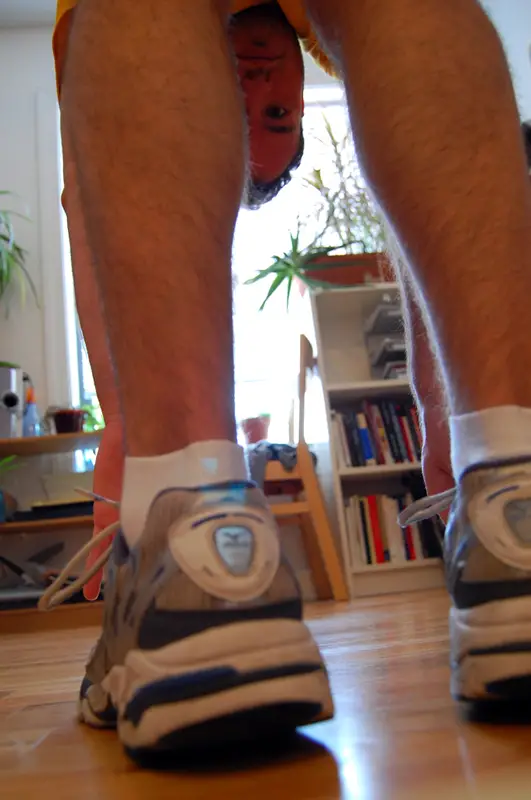
pre-run-stretch-by-reallyboring.jpg I am the first to admit that it took me a long while before being convinced of the benefits of stretching.

Many amateur athletes don’t place a lot of value on stretching. In some respects, it’s understandable. Time is a precious commodity, and stretching is often the first thing to go.

When you are doing speed drills in the pool, or cranking out mileage on your bike, or running hills, it feels like you are doing something worthwhile in your training. All that effort and sweat feels like work. Comparatively, stretching seems quite melodramatic. Heck, you hardly break a sweat, and it seems like you could be sipping your Caramel Macchiato while you do it! It doesn’t seem very Ironman-ish.

But stretching is not just for wimps!

Notice I said “amateur” athletes don’t value stretching.

Professional athletes know how critical stretching is, and they make it a vital part of their training regimen year round.

There is no sport where stretching is more important than the sport of triathlon.

Strength Training For Triathletes

| Comments (0)

strength-training-by-slagheap.jpg The number of muscles in the human body varies from about 640 to 850, depending on which expert you consult.

The question was asked, “What muscles are used in a triathlon?”

Here’s the answer:

Your muscles provide the movement necessary for swimming, biking, and running. How well your muscles do this comes down to how conditioned your muscles are to generate force within a wide range of motion. Weak, inflexible muscles can’t generate much power and velocity, and are more prone to injury.

This is why strength training and stretching are a part of triathlon training for most triathletes.

Dealing With Wind And Waves During Triathlon Swim Training And Competition

| Comments (0)

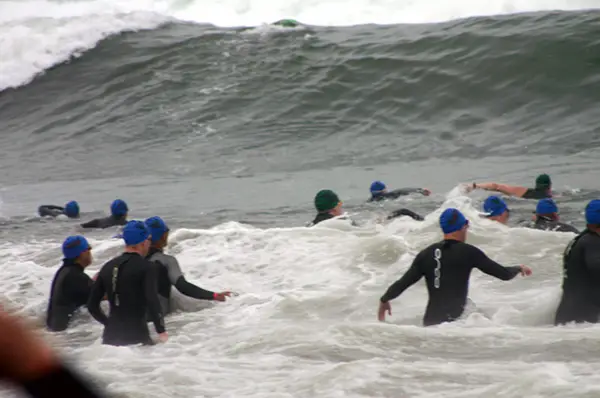
triathletes-battling-serious-waves-by-gasmunky.jpg Last week, I participated in an Olympic Distance Triathlon in a part of the country where the weather was being affected by Hurricane Ike.

On the morning of the triathlon, there was a “wind advisory” or high wind warning for the area with gusts up to 40 mph. The lake was churning with high swells and white caps.

I began the swim in one of the first waves and on my way to the first buoy, it blew away. People became disoriented, and as I began trying to figure out where to go next, I heard the announcement on a bullhorn for all swimmers to return to shore immediately.

Panic-ridden swimmers began signaling for help, and a boat turned over trying to pull struggling swimmers on board. The remaining 10 waves were not permitted to do the swim, and the swim portion of the triathlon was canceled.

The whole experience prompted me to do this article about windy triathlon conditions because it’s not wise to assume that all the triathlon events you participate in are going to have good weather.

The Importance Of Systematic Training For Triathletes

| Comments (0)

running-training-by-anthony-delorenzo.jpg Something that is “systematic” is characterized by order and planning. A systematic approach means methodically following a fixed plan step by step.

For the triathlete, a systematic approach to training will best enable you to accomplish your goals, while minimizing the risk of injury.

How To Choose Triathlon Running Shoes

| Comments (2)

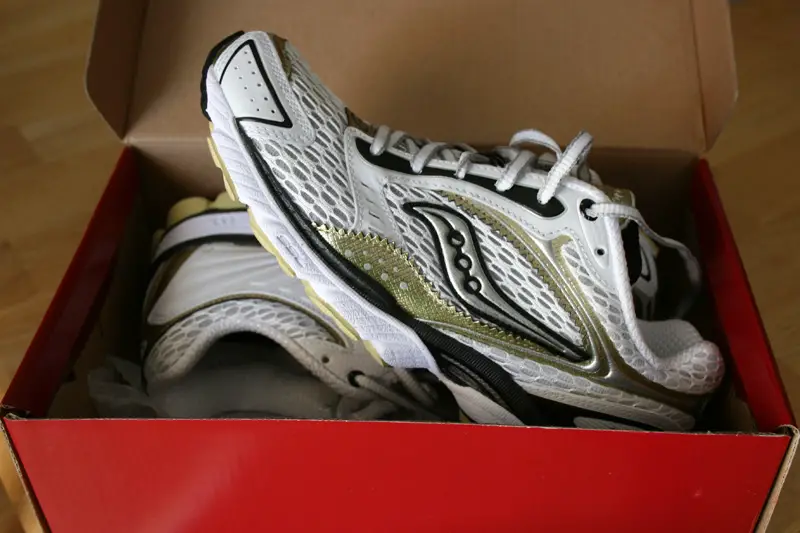
running-shoes-by-jill-glossy-veneer.jpg Yesterday was a long run day for me, which meant 15 miles. Afterwards, I felt it mostly in my feet; a mild flair up of Plantar Fasciitis.

Whether it’s maintaining the proper energy-saving freestyle kick, climbing hills on the bike, or pounding the pavement on your run, triathletes put a lot of demands on their feet. Out of the 3 components of triathlon, running is the hardest on your feet.

Choosing running shoes can be difficult, as well. Here are some things you should know about running shoes for triathletes.

Tips For Successful Transitions In Triathlon Races

| Comments (0)

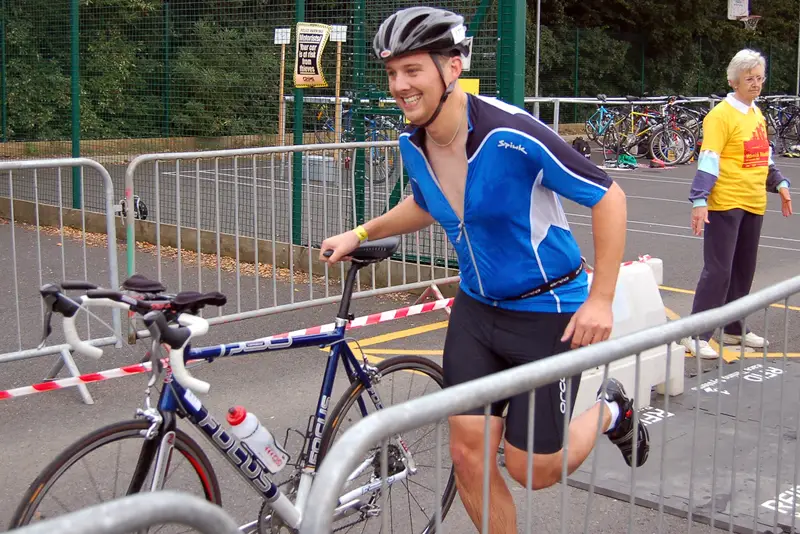
swim-cycle-transition-by-thorin.jpg You spend countless miles and hours in the water, on the bike, and pounding the pavement running, training for a triathlon.

Sometimes it’s just a matter of minutes or seconds between one competitor who places in their division, and another competitor who doesn’t. So why squander away time with bad transitions?

It would presumably take hundreds of training hours to lop 2 minutes off your swim time, and yet 1 hour of transition practice would likely take 2 minutes off your transition time.

How To Deal With Muscle Cramps During Triathlon Training And Competing

| Comments (0)

runner-with-muscle-cramp-by-cesareb.jpg Every triathlete dreads the ‘c’ word: cramps!

In addition to being excruciatingly painful, a muscle cramp could feasibly prevent you from finishing a race you have trained a long time to compete in. I’ve experienced cramps in my feet and toes while swimming, my groin while biking, and my calves and hamstrings while running.

Though cramps can come during the swim or bike portion, they are more common during the run since a person is more susceptible to fatigue or dehydration nearing the latter states of a triathlon.


Photos

  • Swimmers battling rough waters during the swim event in a triathlon. photo by cygnus921
  • Triathletes battling some serious waves at the start of the swim event. photo by gas munky
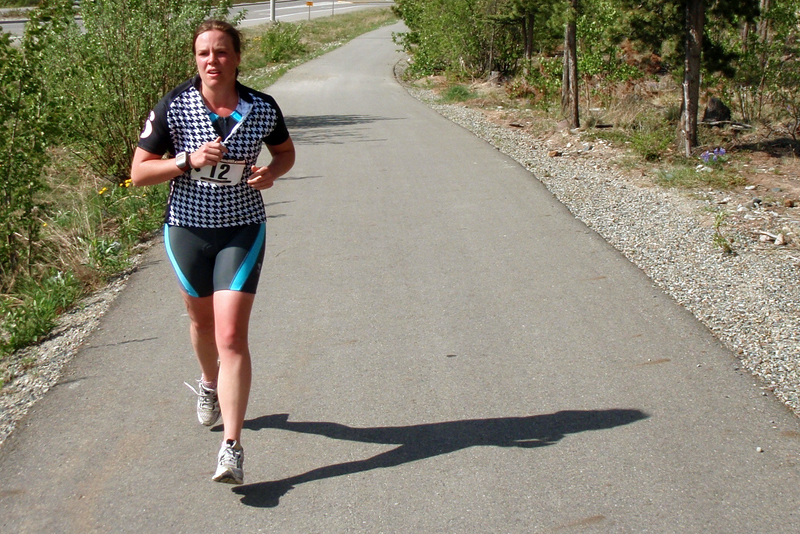
  • Triathlon training - running. photo by anthony delorenzo
  • Systematic training for a triathlete consists of the perfect combination of mind, body and soul. photo by hamburger
  • A runner's feet. photo by rachcald
  • A new pair of running shoes. photo by jill - glossy veneer
  • Practicing the triathlon transition at a local park. photo by dewonn43
  • The swimming to cycling transition in a triathlon event. photo by thorin
  • A runner with a side stitch. photo by bean
  • A runner with a bad muscle cramp. photo by cesareb

Enter your email address:

Delivered by FeedBurner